Amid ongoing discussions about the impacts of social media on younger customers, YouTube is rolling out some new updates to its parental controls, which is able to allow dad and mom to handle their youngsters’ display screen time, with particular components for Shorts versus the common YouTube feed.
As a result of like TikTok and Reels, the endless Shorts feed of video clips may be addictive, and might maintain folks scrolling longer than they intend to.
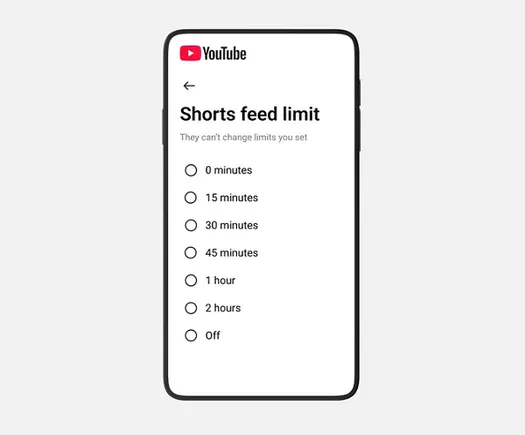
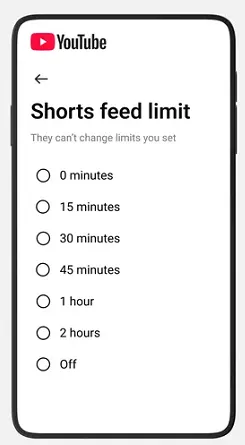
With the intention to assist handle this, YouTube will now give dad and mom a brand new choice to implement a “Shorts Feed Restrict,” to allow them to set an period of time that their youngsters can scroll by means of Shorts.
As defined by YouTube:
“Mother and father can now assist teenagers be much more intentional about how they watch, with a management to set the period of time spent scrolling Shorts. And shortly, dad and mom will see the choice to set the timer to zero. For instance, they’ll set the Shorts feed restrict to zero when they need their teen to make use of YouTube to deal with homework, and alter it to 60 minutes throughout an extended automobile journey to be entertained.”
So dad and mom will now have extra capability to handle when their kids are allowed to scroll by means of Shorts, which might handle considerations round them losing hours mindlessly swiping by means of the feed.
If, in fact, these dad and mom are literally utilizing YouTube’s parental controls, and are capable of oversee that element, whereas it additionally is determined by how youngsters are viewing YouTube (i.e. in the event that they’re logged in). That’s an entire different ingredient, nevertheless it offers another choice that can allow dad and mom to raised handle their youngsters’ time within the app, which might present extra assurance.
Which leads into the subsequent replace: YouTube’s additionally rolling out an up to date sign-up/sign-in expertise which is able to allow dad and mom create accounts for his or her youngsters, and simply swap between accounts within the cell app, relying on who’s watching.
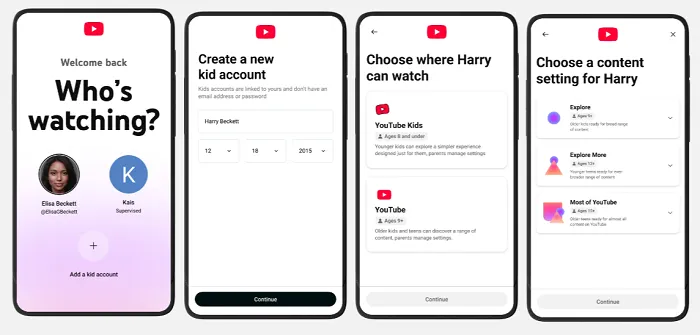
So it’s extra just like the Netflix or Disney+ model of log in, the place every account’s particular person settings can be personalized primarily based on every consumer.
That’ll give dad and mom one other manner to make sure their youngsters are having a protected viewing expertise, by selecting what stage of content material publicity they’re comfy with for his or her youngsters.
And YouTube is assured that its content material filtering instruments do maintain youngsters away from dangerous content material, which, in its view, offers a greater strategy than attempting to ban teenagers from the app.
“We imagine in defending youngsters in the digital world, not from the digital world. That’s why we’ve spent over a decade constructing tailor-made merchandise and built-in protections for our youngest viewers.”
It is a core tenet that each one the most important platforms have argued in response to proposed (and enacted) teen social media bans, that on-line platforms now play such a big position in social connection that blanket bans merely received’t work, and a greater strategy is to offer extra protecting measures in-stream.
A key concern about blanket bans, like the brand new guidelines in Australia, is that it will push teenagers to much less regulated, much less safe platforms as an alternative, whereas YouTube, and different mainstream apps, have spent years implementing protections.
It’s a stable argument, besides, extra nations are reportedly trying to observe Australia’s lead in implementing increased age thresholds for social media entry.
Which, in lots of respects, feels extra like a ploy to win over older voters than one rooted in what’s greatest for youths.
Lastly, YouTube’s additionally introducing new rules, in addition to a creator information “to steer teenagers towards content material that’s enjoyable, age-appropriate, higher-quality, and extra enriching.”
“Developed in partnership with our Youth Advisory Committee and the Middle for Students & Storytellers at UCLA and supported by world specialists from the American Psychological Affiliation, Digital Wellness Lab at Boston Kids’s Hospital, and different world organizations, these rules define the sorts of content material which might be deemed to be low high quality and top quality for teen audiences.”
So, extra teen protections, extra steering on useful YouTube utilization, and extra methods for fogeys to supervise and handle their youngsters’ time.
Will that sluggish the push for all younger teenagers to be booted from social apps? In all probability not, however there’s logic in YouTube’s varied counterarguments.
Andrew Hutchinson