![#
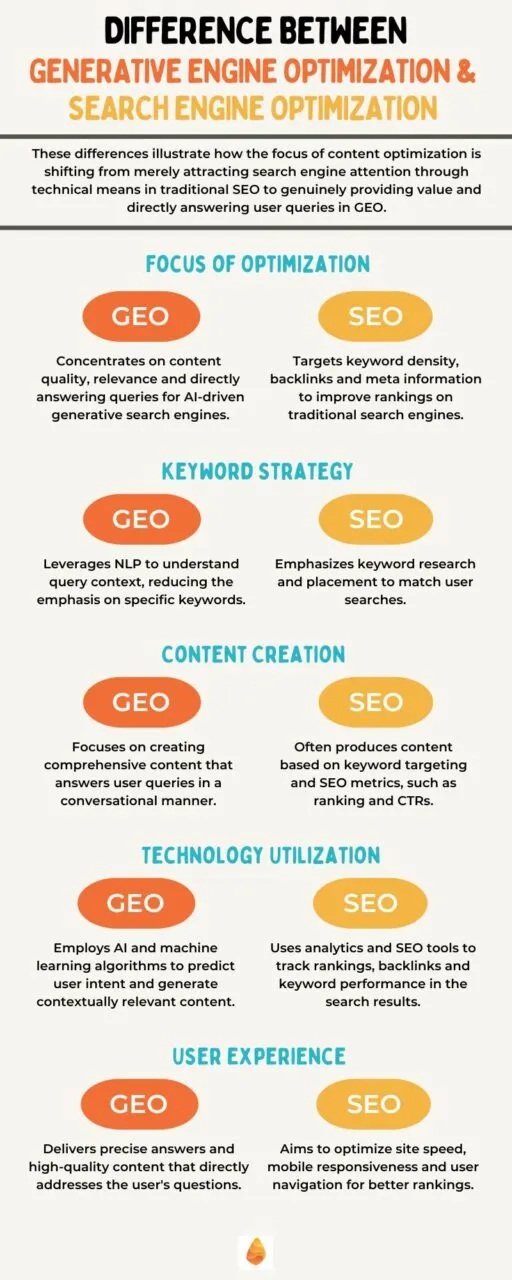
The Distinction Between Search Engine Optimization and Generative AI Optimization [Infographic]](https://imgproxy.divecdn.com/b59UDHCZJPojM5BTXMFnyWP470G-iSp3_rYKcR_8x9A/g:ce/rs:fit:770:435/Z3M6Ly9kaXZlc2l0ZS1zdG9yYWdlL2RpdmVpbWFnZS9zZW9fdnNfZ2VvXzIucG5n.webp "#
The Distinction Between Search Engine Optimization and Generative AI Optimization [Infographic]")
With an increasing number of on-line discovery now occurring by way of conversational AI chatbots, entrepreneurs are progressively altering focus from search engine marketing (web optimization) to generative engine optimization (GEO), which requires a unique method and mindset.
GEO goals to make sure that your web site and/or model will get cited in AI solutions, which is far tougher to cater to, and has fewer established guidelines round issues like key phrase matching and URL knowledge. GEO forces entrepreneurs to consider conversational queries as a substitute, and the sorts of direct responses that present up in AI queries.
The main focus of GEO is “citable chunks” which reply frequent questions, as these are extra probably, relying on area authority, to be referenced in an AI response.
Consultants have discovered that listicles can entice AI linkage, although experience is the first driver of consideration, which is established by high-quality content material, related backlinks, and so forth. So the foundations of web optimization stay the identical to a point, nevertheless it’s the specifics, by way of presenting info, which might be completely different.
Different approaches that result in extra references in AI solutions embrace comparability tables, rankings, suggestions and authentic analysis.
The problem then is that many AI solutions don’t find yourself resulting in a click on, with referral site visitors in fast decline for a lot of internet publishers.
Although, I suppose, you’re both resigning your self to the truth that you received’t get any hyperlinks, otherwise you’re working to keep up no matter you possibly can by GEO course of.
Although in lots of instances, perhaps the main focus ought to be much less on ways and extra on the content material itself.
To offer some extra context on this, try this infographic from the workforce at Single Grain which outlines the variations between web optimization and GEO.
Andrew Hutchinson