LinkedIn has reached a brand new milestone with its person verification system, with over 100 million customers now ID verified via LinkedIn’s free verification course of.
Initially launched in 2023, LinkedIn’s free ID affirmation course of makes use of third-party suppliers to substantiate a person’s id, which then permits these customers to show a affirmation tick within the app.
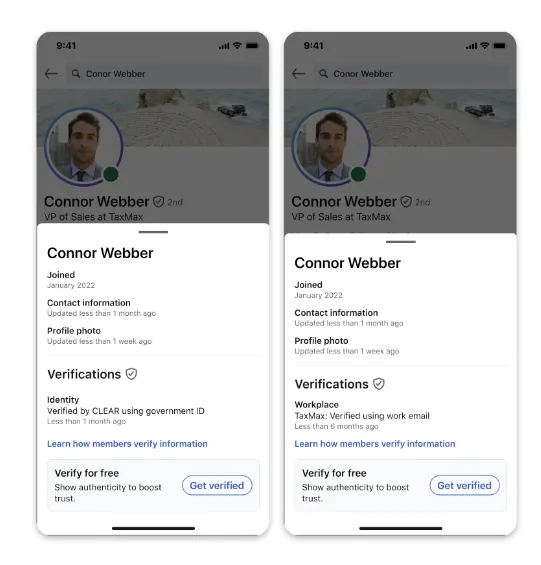
With this, all customers are in a position to verify that they’re certainly who they are saying, versus movie star or paid verification checkmarks in different apps.
And that’s had an affect.
LinkedIn says that ID verified members see as much as 60% extra profile views, and stand up to 50% extra engagement on their posts.
“And for organizations, they enhance engagement, with 10.9x extra views and seven.7x extra followers on verified Pages.”
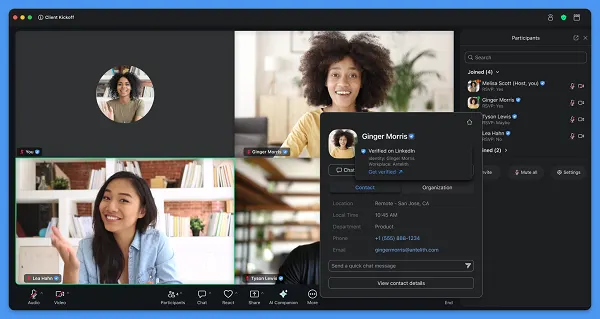
LinkedIn’s additionally been working to broaden its ID markers to different platforms, with Zoom and Adobe now additionally incorporating LinkedIn’s ID indicators, increasing human verification throughout extra apps.
LinkedIn’s additionally been increasing the choice to extra areas, in partnership with native ID verification suppliers.
And that’s clearly had an affect, with near 10% of all LinkedIn members now confirming their ID.
Which is nice for transparency, particularly on a social community that’s designed to showcase skilled presence.
However then once more, I additionally really feel like LinkedIn is negating that as effectively to some extent, by giving everybody methods to pretend their skilled information and experience through the use of AI to compose their updates.
LinkedIn has added AI to each factor that it might probably, together with submit creation, job functions, and many others. That implies that the feedback and updates that you just’re studying within the app should not at all times indicative of a human’s unique ideas and concepts, and could be AI-generated commentary, which bears no reflection of the creator’s personal mind.
Which is misleading, and on a platform the place persons are attempting to showcase their competencies and ideas, it doesn’t appear to suit.
However I suppose the counterargument is that they may simply generate the identical in different AI apps, then submit them to LinkedIn both approach. However I don’t know, I don’t assume that LinkedIn, specifically, must be making it really easy to pretend your option to a extra grandiose presence within the app.
On the similar time, LinkedIn’s verification system has been an important change, offering a easy, free approach for folks to substantiate that they’re an actual particular person, serving to to underline authenticity and belief.
Others, like Elon Musk, have argued that verification techniques are too straightforward to recreation, and that the one option to keep away from an onslaught of bot profiles is to power customers to pay, with the intention to verify that they’re, in actual fact, actual, precise folks. However LinkedIn’s system exhibits that there are methods to supply human verification with out financial parts, which, not less than based mostly on my evaluation of the method, look fairly troublesome to recreation, and positively troublesome to control at scale.
Which ought to imply fewer bots, and extra belief in LinkedIn’s listings. And ultimately, with so many customers verifying their data, this can develop into the baseline expectation, prompting much more customers to substantiate their id.
It’s a precious initiative, although once more, I’m involved that available AI instruments might also dilute belief within the app, even with these ID verification choices.
Andrew Hutchinson