Amid varied debates in regards to the risks of web entry for teenagers, and controls that may be applied to guard younger customers, Google has revealed a brand new report which appears to be like at how European youngsters are utilizing the most recent know-how, and the relative dangers and academic alternatives primarily based on the identical.
Google’s new “Future Report,” created in partnership with youth consultancy Livity, incorporates survey insights from greater than 7,000 teenagers aged 13-18 throughout Eire, Poland, Greece, Spain, Italy, France, and Sweden.
The full 77-page report covers off on a variety of key areas of concern, together with digital training, reliance on social media and digital platforms, growing AI use and extra.
And there’s a number of useful perception, for folks and entrepreneurs, contained inside.
First off, the report appears to be like at how teenagers view the advantages of on-line connectivity, and what they’re doing on-line.
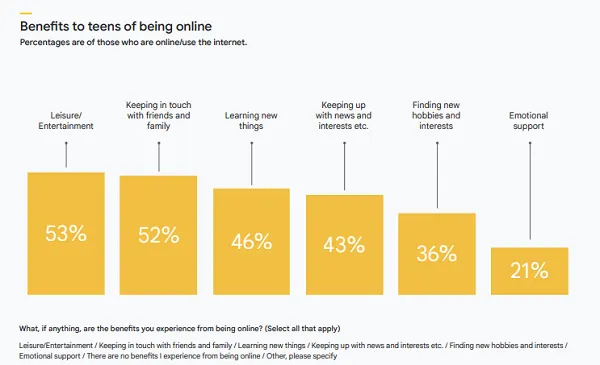
As you may see on this chart, leisure/leisure is the first motive why teenagers use the web, whereas maintaining with buddies and studying about their pursuits are available shut behind.
Which isn’t any actual shock, although it’s worthy of observe how precisely teenagers are discovering new issues on the internet:
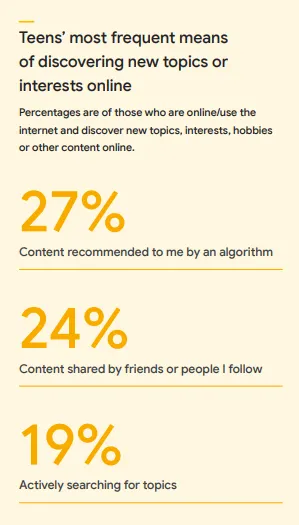
Algorithmic amplification performs a key position in exhibiting customers issues that they may be taken with, which underlines the facility that social platforms have in guiding teen pondering, and swaying pursuits primarily based on algorithmic weighting.
That will or might not be an enormous concern, relying on who’s accountable for these algorithms, and the way a lot belief you’re prepared to place in them. However it’s an attention-grabbing consideration. China, for instance, implements extra stringent controls over algorithmic amplification in native social media apps geared toward teenagers with the intention to keep away from anti-social or dangerous developments gaining traction.
The perception right here would counsel that this might have a major affect on broader behaviors.
The report additionally appears to be like on the position that video content material, specifically, performs in fashionable teen life:
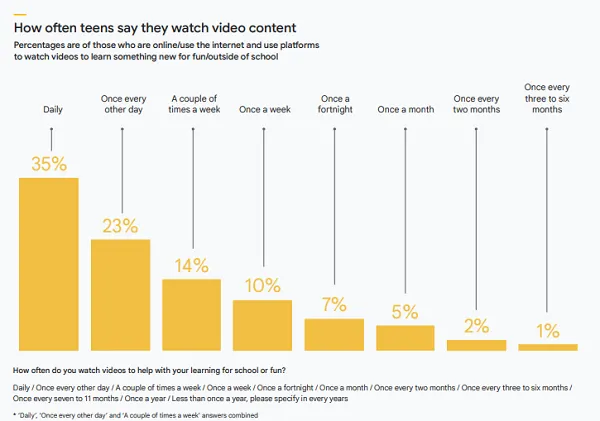
Protected to say that video can also be a major affect on EU teen tradition, with YouTube being a key driver of broader teen engagement and developments.
The report additionally appears to be like on the adoption of AI, and the way teenagers view the most recent AI instruments.
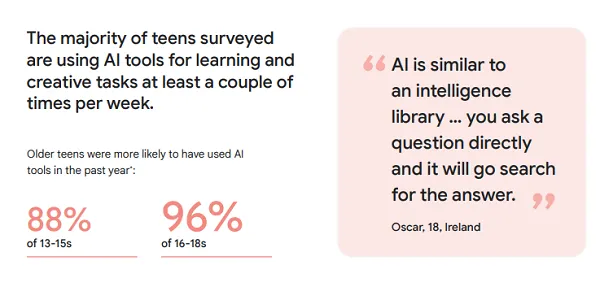
And teenagers are most undoubtedly adopting AI chatbots and apps:
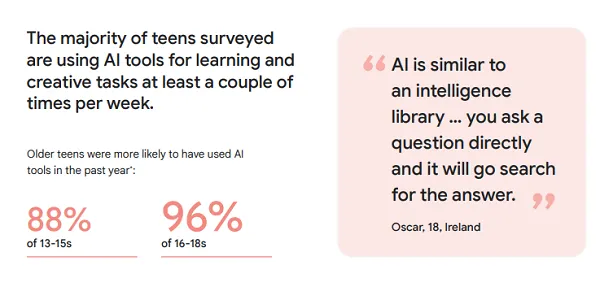
Most teenagers are actually conscious of AI instruments, and are incorporating them into their day by day actions, with the commonest utilization of AI being to do college work:
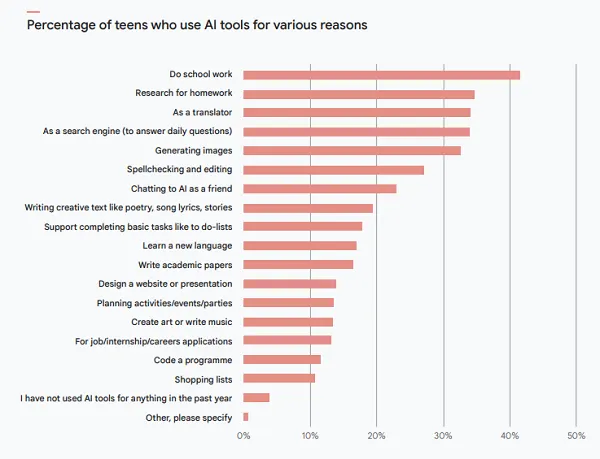
Many teenagers additionally say that AI instruments assist them enhance their creativity, and it’s attention-grabbing to think about the broader affect of this shift, and the way teenagers rising up any further gained’t know a world the place AI help instruments by no means existed.
That’s going to alter the paradigm for training extra broadly, and put extra emphasis on using AI instruments for coaching, in increasingly more contexts. Which raises questions on reliability, and inside this, teenagers are additionally studying confirm info offered to them on-line and in AI instruments.
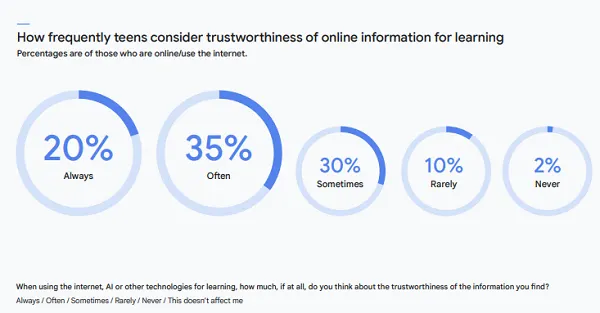
Digital literacy is changing into a good larger consideration on this respect, as a result of AI instruments, usually, solely summarize what’s already obtainable on the internet, and with out some degree of vital evaluation, that may typically result in incorrect and/or deceptive outcomes.
The way in which to resolve that is to make sure that you don’t depend on AI solutions in isolation, and that you just use them as a information, which is a vital lesson that each one internet customers have to think about.
Which is one other aspect of the report:
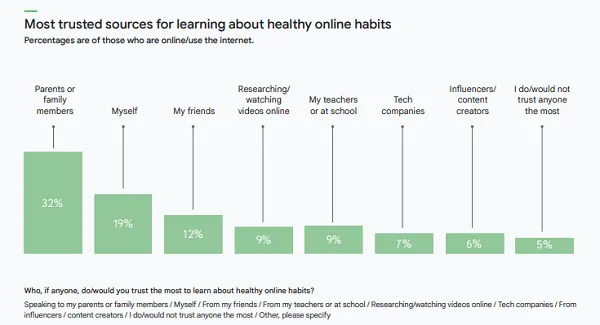
This can be a key level, youngsters are turning to oldsters to assist information them on reliable info, and as such, dad and mom additionally want to make sure that they will reply these questions.
Which many doubtless can’t, and it’s price additionally noting that older teenagers cease counting on dad and mom as a lot on this respect.
“At ages 13-15, greater than half of teenagers (54%) flip to trusted dad and mom or guardians to study wholesome on-line habits. However at ages 16-18, that quantity drops to lower than one in 5 (19%), suggesting that one of the best time for younger individuals to study good on-line hygiene is after they’re nonetheless extra open to conversations with the adults of their lives.”
So for one, youngsters want extra digital literacy training at a younger age, from trusted, knowledgeable sources. But additionally, dad and mom should be cautious that older teenagers are going to tune them out, and at a vital time for potential publicity and hurt, they’re now not in search of this recommendation, from them no less than.
In a time of speedy technological change, that is one other aspect of concern.
So what are the important thing outcomes primarily based on all of this?
Properly, the primary lesson is that governments have to put extra give attention to digital literacy training, from the impacts of algorithms, to the issues of AI-generated solutions, to satisfactory security habits inside on-line interactions.
Many areas are additionally trying to enhance the age of social media entry, with the intention to restrict potential harms, however the perception right here reveals that AI and video entry (by way of YouTube) is simply as vital a priority, whereas the social advantages of on-line connection is also considerably impacted by any such enhance.
Training, significantly amongst youthful teenagers, is the important thing step. And whereas a degree of safety via enhanced age checking will even assist, the longer term is already right here when it comes to how kids are utilizing digital instruments to study in regards to the world.
Governments also needs to be pushing to know extra about algorithmic amplification amongst teenagers, and what safeguards might be applied at this degree, whereas colleges also needs to be investing in digital training for folks to raised attain younger customers.
You’ll be able to take a look at the total EU “Future Report” right here.
Andrew Hutchinson