Seems like Fb group members haven’t been overly enthused by its group chat choices, with the platform now informing group admins that it’s eradicating group chat performance quickly.
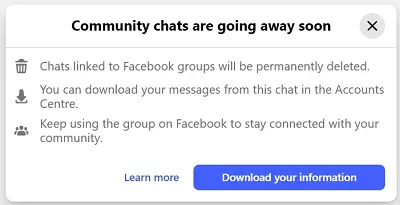
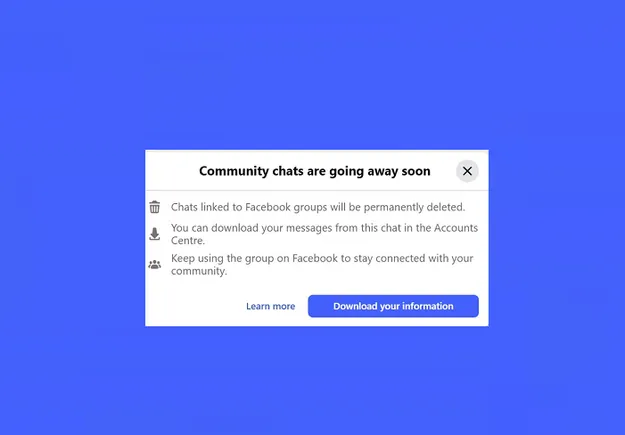
As you may see on this instance notification, shared by CM Calgary, Fb is at present informing group admins that Neighborhood Chats might be “going away” shortly.
Fb initially launched Neighborhood Chats again in 2022, as a method to faucet into the rising use of messaging as the important thing interactive component.
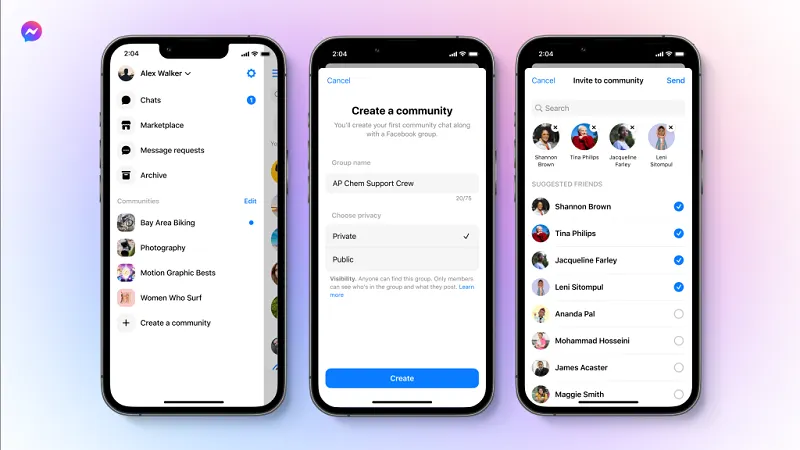
The concept was that this may lengthen group discussions to Messenger, and assist group members hyperlink their discussions into their chat apps. However clearly, the idea hasn’t resonated with sufficient group members.
Which is sensible. In case you be part of a WhatsApp group, for instance, you be part of it to debate that subject on WhatsApp particularly, whereas in the event you be part of a Fb group, you’re doing so to have interaction inside that app. And whereas among the extra engaged communities and members would possible be comfortable to increase these discussions to a different discussion board, the relative lack of curiosity most likely reveals that your preliminary choice in becoming a member of is indicative of the place you favor these discussions to remain, versus spreading such throughout different apps.
Or folks simply didn’t discover use for them, since they’re already conducting their discussions on Fb. Or the Fb viewers isn’t as lively in different apps.
Regardless of the motive, they clearly haven’t labored out, which is why Fb’s retiring the choice.
Fb additionally as soon as supplied audio dialogue rooms in teams, on the peak of the audio social fad, however these additionally didn’t see a lot utilization, and had been eliminated again in 2023.
So once more, it looks like Fb group members desire to maintain their interplay inside the confines of the present group setup, with notifications about such coming into their Fb feeds, versus getting alerts about associated chats on Messenger as properly.
Which additional underlines the truth that messaging is for extra intimate, direct dialog, largely with household and associates, whereas extra social, group chat parts, with a broader group of individuals you don’t essentially know personally, belong in social apps.
Strive as they could, no platform has been capable of efficiently cross this paradigm, and merge extra social-aligned performance into messaging apps.
Not like Asian audiences, which clearly desire to have many functionalities inside a single platform, Western customers have proven time and time once more that they like to make use of separate apps for various function.
Andrew Hutchinson