With Australia’s new teen social media restrictions set to return into impact inside weeks, we’ll quickly have our first important check of whether or not such restrictions are workable, and certainly, enforceable by legislation.
As a result of whereas help for more durable restrictions on social media entry is now at file excessive ranges, the problem lies in precise enforcement, and implementing methods that may successfully detect underage customers. To this point, no platform has been capable of enact workable age checking at scale, nevertheless all platforms at the moment are creating new methods and processes within the hopes of aligning with these new authorized necessities.
Which additionally look set to turn into the norm world wide, following Australia’s lead.
Australia particularly, from December tenth, all social media platforms should “take affordable steps” to prohibit teenagers underneath the age of 16 from accessing their apps.
To be clear, the minimal age to create an account on all the most important social apps is 14, however this new push is designed to extend enforcement, and be sure that every platform is being held accountable for retaining younger teenagers out of their apps.
As defined by Australia’s eSafety Fee:
“There’s proof between social media use and harms to the psychological well being and wellbeing of younger folks. Whereas there might be advantages in social media use, the danger of harms could also be elevated for younger folks as they don’t but have the abilities, expertise or understanding to navigate advanced social media environments.”
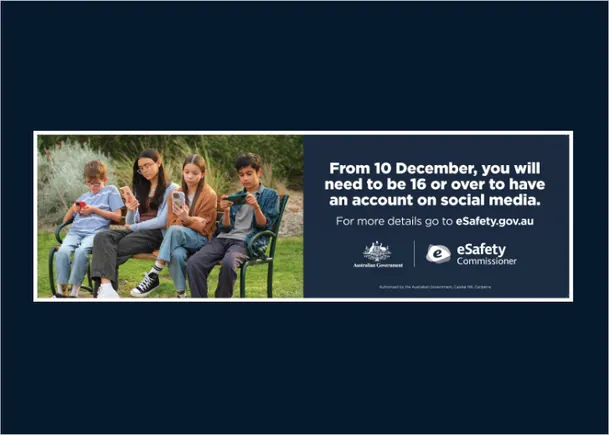
Which is why Australia is enacting this new legislation, with the eSafety Fee now working advertisements in social apps to tell customers of the approaching change.
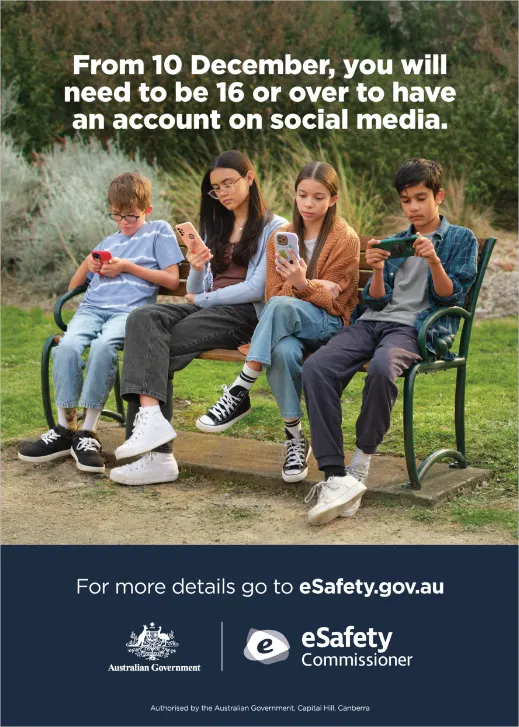
And as famous, many different areas are additionally contemplating related restrictions, primarily based on the rising corpus of proof that social media publicity might be dangerous for younger customers.
Although detection stays a problem, and with out common guidelines on how social apps detect and prohibit teenagers, authorized enforcement of any such invoice will probably be troublesome.
In Australia’s case, it truly performed a sequence of assessments with numerous age detection measures, together with video selfie scanning, age inference from alerts, and parental consent necessities, with a purpose to decide whether or not correct age detection is feasible utilizing the newest expertise, and what the very best method is perhaps.
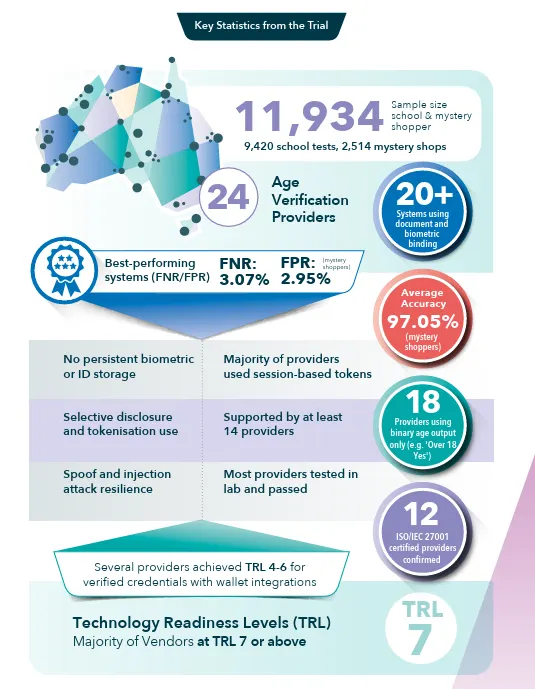
The abstract outcomes from this report have been:
“We discovered a plethora of approaches that match totally different use circumstances in numerous methods, however we didn’t discover a single ubiquitous resolution that might go well with all use circumstances, nor did we discover options that have been assured to be efficient in all deployments.”
Which appears problematic. Fairly than implementing an industry-standard system, which might then be sure that all social platforms underneath these new restrictions can be held to the identical requirements, Australia has as a substitute opted to advise the platforms of those numerous choices, and allow them to select which they need to use.
The justification right here, as per the above quote, is that totally different expertise has totally different advantages and limitations in various context, and as such, the platforms themselves want to seek out the very best resolution for his or her use, in alignment with the brand new guidelines.
Although that looks like a possible authorized loophole, in that if a platform is discovered to be failing to limit younger teenagers, they’ll be capable of argue that they’re taking “affordable steps” with the methods they’ve, whether or not they’re the simplest methods or not.
Given this, YouTube has already refused to abide by the brand new requirements (arguing that it’s a video platform not a social media app), whereas each social platform has opposed the push, arguing that it merely received’t be efficient. One other counterargument right here is that the ban will truly find yourself driving younger folks to extra harmful corners of the web that aren’t being held to the identical requirements, although Meta and TikTok have stated that they’ll adhere to the brand new guidelines, despite the fact that they object to them.
Although in fact, given the utilization impacts, you’d count on the platforms to push again. Meta reportedly has round 450k Australian customers underneath the age of 16 throughout Fb and IG, whereas TikTok appears set to lose round 200k customers, and Snap has greater than 400k younger teenagers within the area.
As such, perhaps the platforms would push again, irrespective of the element, although Meta has additionally applied a spread of recent age verification measures of its personal to adjust to these, and different proposed teen restrictions.
And once more, many areas are watching Australia’s implementation right here, and contemplating their very own subsequent steps.
France, Greece and Denmark, have put their help behind a proposal to limit social media entry to customers aged underneath 15, whereas Spain has proposed a 16 year-old entry restriction. New Zealand and Papua New Guinea are additionally shifting to implement their very own legal guidelines to limit teen social media entry, whereas the U.Okay. has applied new laws round age checking, in an effort to pressure platforms to take extra motion on this entrance.
A technique or one other, extra age restrictions are coming for social apps, so that they should implement improved measures both method.
The query now’s round effectiveness in method, and how one can set a transparent {industry} commonplace on this component.
As a result of telling platforms to take “affordable steps,” then leaving them to seek out their very own finest method ahead, goes to result in authorized challenges, which may properly render this push successfully ineffective.
Andrew Hutchinson